
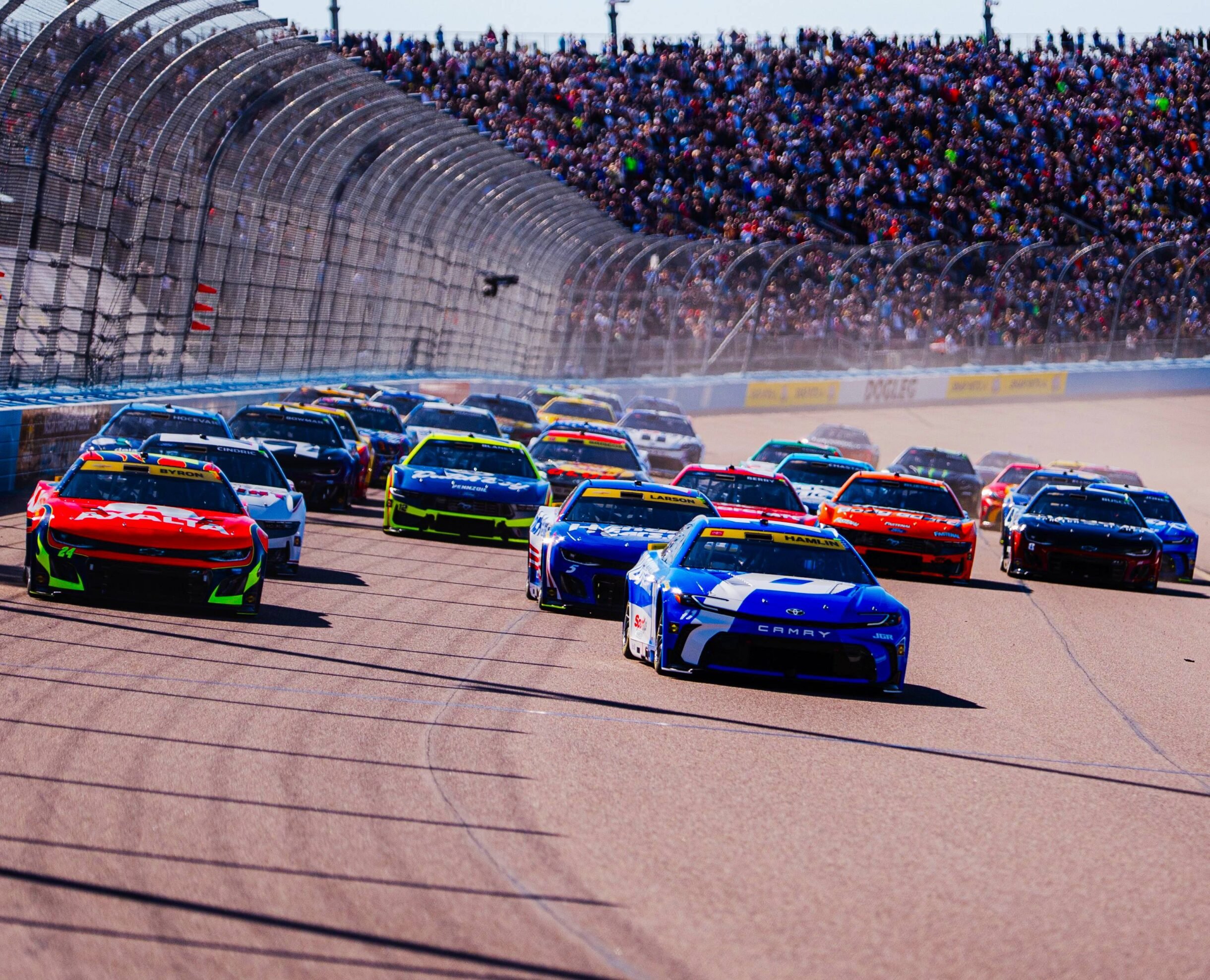
NASCAR 2025 Season Finale – A Dramatic End to a Turbulent Year
The 2025 NASCAR Cup Series came to a close at Phoenix Raceway, wrapping up a season filled with intense racing, shifting momentum, and a fair bit of controversy bubbling beneath the surface.
Kyle Larson secured the championship, delivering another strong year for Hendrick Motorsports. His consistency, composure under pressure, and late-season surge put him ahead of the pack when it mattered most. While several drivers had flashes of brilliance throughout the year, Larson’s ability to capitalise on crucial moments ultimately set him apart.
Team Penske, dominant in earlier seasons, found 2025 far less forgiving. Although all four of their cars reached the Playoffs, they couldn’t convert the opportunity into a championship. Their campaign highlighted the widening gap between the top organisations and those struggling to keep pace financially and competitively.
Middle-tier teams felt the strain more than ever. Budget limitations, rising costs, and a fiercely competitive field made it difficult for many to maintain form throughout the year. The finale, while exciting on track, only underscored the financial tension simmering away in the background — tension that is now very much in the spotlight.
The NASCAR Lawsuit – What’s Happening and Why It Matters
As the season concluded, the biggest story in NASCAR wasn’t on the circuit — it was unfolding in the courtroom.
Who is suing whom?
Two teams, 23XI Racing and Front Row Motorsports, have taken legal action against NASCAR. Their complaint centres on claims that NASCAR holds an unfair level of control over the sport. They argue that the existing system gives teams little autonomy and makes long-term financial stability extremely difficult unless you belong to one of the powerhouse organisations.
What’s the core issue?
The dispute revolves mainly around the charter system. Charters grant guaranteed race entries and provide a structure for sharing revenue. Critics argue that the terms disproportionately benefit established teams, leaving newer or smaller outfits at a disadvantage.
23XI and Front Row refused to sign the proposed charter agreement for 2025, calling it restrictive and unsustainable. They claim NASCAR’s control over entries, suppliers, revenue and commercial rights amounts to an effective monopoly.
What has happened in the trial?
The trial began in late 2025. Early testimony painted a stark picture of team finances. Running a competitive Cup Series car can cost tens of millions per year, and many teams say the current revenue structure doesn’t come close to covering that without relying on heavy outside sponsorship.
Team co-owner Denny Hamlin took the stand early on and spoke about how the system leaves teams with little room to negotiate or pursue alternative commercial opportunities. His testimony highlighted the scale of the financial challenge and the pressure smaller teams face simply to survive.
NASCAR, meanwhile, maintains that the charter system brings stability, guaranteed race access and long-term value to teams. They argue that the system is designed to create sustainability rather than unfair restrictions.
Why the outcome matters
Depending on how the case unfolds, the consequences could be significant:
- The charter system may be reworked or dismantled.
- Teams could gain more independence over sponsorships, suppliers and commercial rights.
- Revenue distribution may change to give mid-level and smaller teams a better chance of staying competitive.
- NASCAR’s level of control over the sport may be reduced, potentially reshaping how the series is run.
If the lawsuit fails, teams like 23XI and Front Row may face an uphill battle to remain competitive without the guarantees and financial security that charters typically provide.
What It Means for Fans
Regardless of who wins, the lawsuit is poised to influence NASCAR’s future just as much as any championship battle:
- Fans may see a more balanced competitive field if revenue sharing becomes fairer.
- The sport could become more open and flexible for new teams and investors.
- Short-term uncertainty is likely, but the long-term result may be a healthier, more predictable environment for teams, drivers and supporters.
The 2025 season finale capped off a brilliant campaign on track — but the biggest storyline for the sport’s future is now being written in court.
Leave a Reply